The ACUHO-I membership includes a diverse range of institutions. Despite their differences, though, they share a common goal to deliver exemplary student experiences.
Assessing individuals, programs, and operations, though, requires a proper measuring stick. That’s why campus housing programs rely on established professional standards to inform their strategic direction and operational procedures.
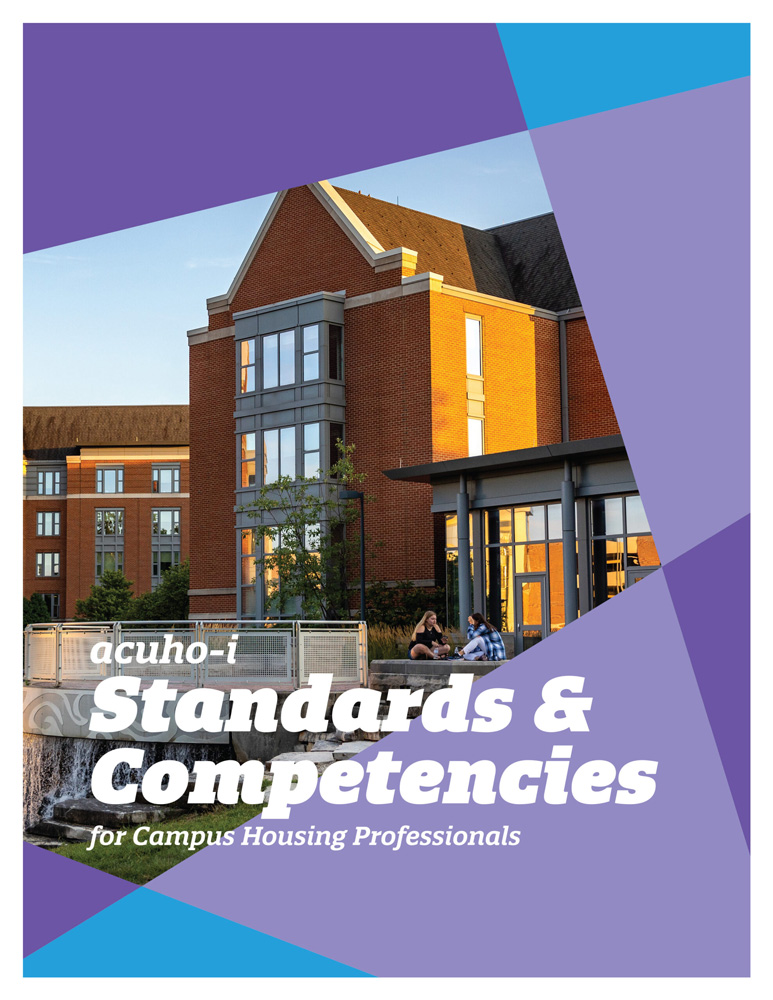
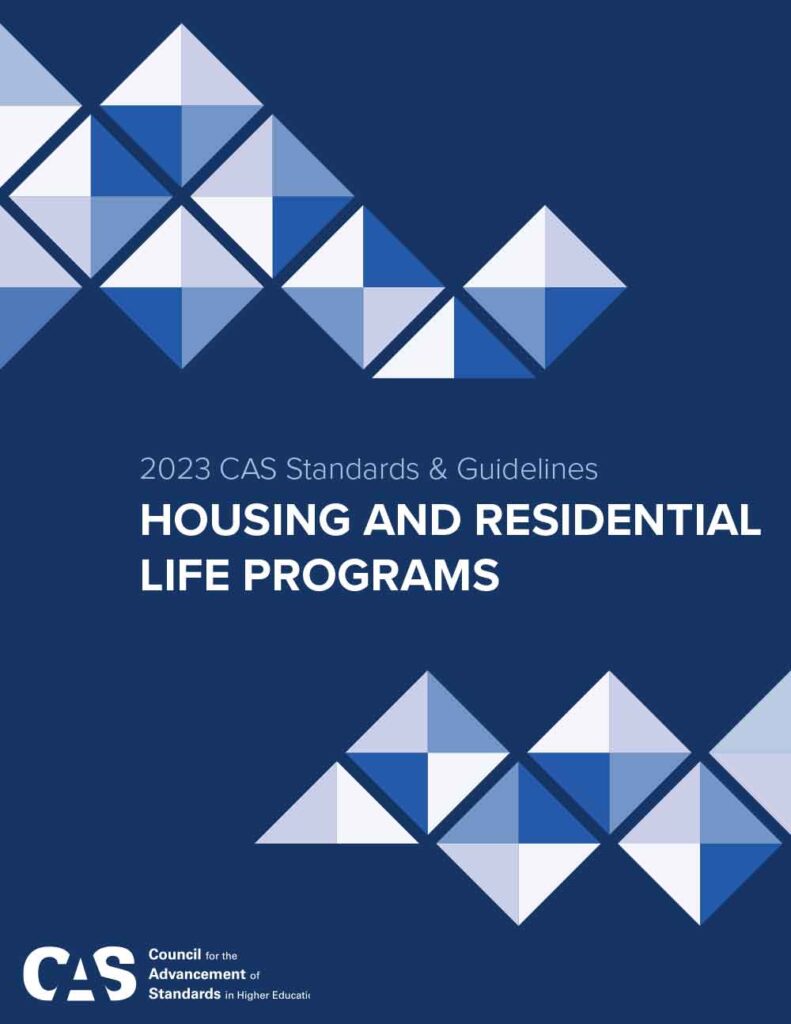
Two of the leading resources for establishing standards in campus housing are the ACUHO-I Standards & Competencies for Campus Housing Professionals and the CAS Standards, which are available in digital format through the CAS+ portal. Crafted in broad terms to better enable their application, these best practices and standards are invaluable ways to assess operations, identify gaps, and plan accordingly for the future.
ACUHO-I Standards and Competencies
The ACUHO-I Standards & Competencies for Campus Housing Professionals provide a compendium of best practices that, while voluntary, campus housing programs are strongly encouraged to use. Standards and guidelines are used to evaluate programs, create self-assessments, shape staff training, and more. You can count on the ACUHO-I Standards to help assess your department’s mission, functional areas, qualifications, and ethics.
In addition, this resource, updated in 2025, also contains the competencies that individual professionals need to achieve the corresponding standards. When individuals understand the skills and knowledge they need to succeed, they can better plan their career path and seek out the appropriate professional development opportunities.
Functional domains covered in the ACUHO-I Standards & Competencies for Campus Housing Professionals include:
Foundations
Student Learning and Development
Residential Facilities
Business Management
Human Resources
Ancillary Partnerships
Public-Private Partnerships
Emergency Management
Dining Services
ACUHO-I Standards & Competencies for Campus Housing Professionals
The ACUHO-I Standards & Competencies for Campus Housing Professionals has been updated for 2025 and beyond. Explore the new edition to discover the best practices that housing departments should strive to achieve as well as the individual professional skills and knowledge that staff members—at all career levels—must have to reach those goals. The information you need to power up your department’s performance and maximize your career progression is all here in one document.
This new edition was headed up by Amanda Knerr of Ball State University who worked alongside more than 30 volunteer professionals to review, revise, and reimagine the standards and competencies. ACUHO-I members have free access to this vital resource through the online community. Download your copy today and begin working for a stronger, more productive department and career.
The Council for the Advancement of Standards in Higher Education promotes standards for functional areas in student affairs, including housing and residential life. These standards foster student learning, development, and achievement, as well as promote professional practice. Designed to describe quality practice, the standards are developed through collaboration and consensus and can be applied across institutional types and sizes.
ACUHO-I works with the Council for the Advancement of Standards in Higher Education to review and report updates to the Housing and Residential Life standards. ACUHO-I Members can access the CAS+ Portal at a discounted rate to explore CAS Standards online, create customized Self-Assessment Guides (SAGs), and more.
Used by Google Analytics to determine which links on a page are being clicked
30 seconds
_ga_
ID used to identify users
2 years
_gid
ID used to identify users for 24 hours after last activity
24 hours
_gat
Used to monitor number of Google Analytics server requests when using Google Tag Manager
1 minute
_gac_
Contains information related to marketing campaigns of the user. These are shared with Google AdWords / Google Ads when the Google Ads and Google Analytics accounts are linked together.
90 days
__utma
ID used to identify users and sessions
2 years after last activity
__utmt
Used to monitor number of Google Analytics server requests
10 minutes
__utmb
Used to distinguish new sessions and visits. This cookie is set when the GA.js javascript library is loaded and there is no existing __utmb cookie. The cookie is updated every time data is sent to the Google Analytics server.
30 minutes after last activity
__utmc
Used only with old Urchin versions of Google Analytics and not with GA.js. Was used to distinguish between new sessions and visits at the end of a session.
End of session (browser)
__utmz
Contains information about the traffic source or campaign that directed user to the website. The cookie is set when the GA.js javascript is loaded and updated when data is sent to the Google Anaytics server
6 months after last activity
__utmv
Contains custom information set by the web developer via the _setCustomVar method in Google Analytics. This cookie is updated every time new data is sent to the Google Analytics server.
2 years after last activity
__utmx
Used to determine whether a user is included in an A / B or Multivariate test.
18 months
_ga
ID used to identify users
2 years
Google reCAPTCHA helps protect websites from spam and abuse by verifying user interactions through challenges.
Name
Description
Duration
_GRECAPTCHA
Google reCAPTCHA sets a necessary cookie (_GRECAPTCHA) when executed for the purpose of providing its risk analysis.